How to Catch Rainbow Trout: Complete Guide for All Skill Levels
Master rainbow trout fishing with this complete guide covering gear setup, proven techniques, seasonal strategies, and insider tips to land more trout from rivers, streams, and lakes.
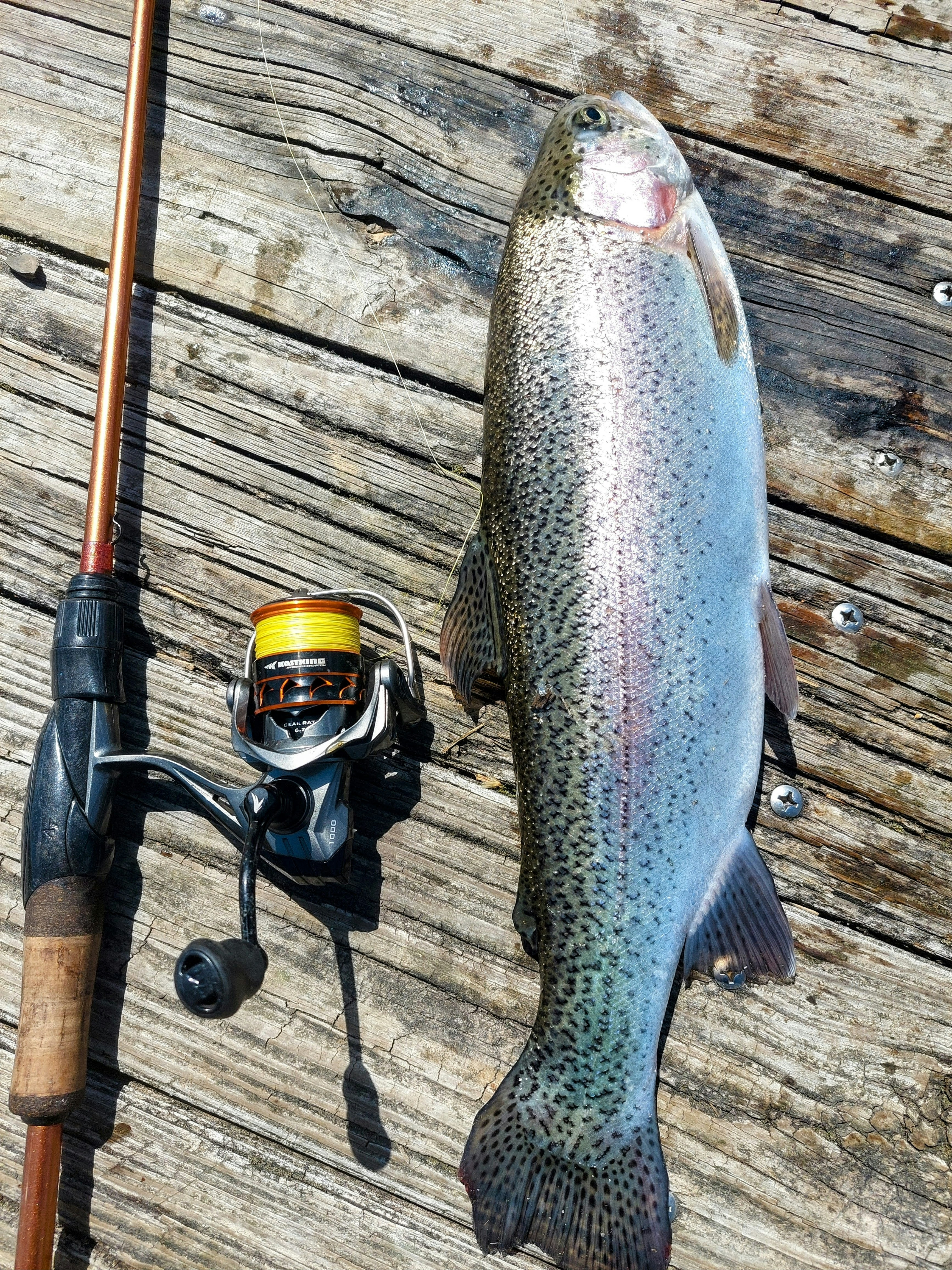
How to Catch Rainbow Trout: Complete Guide for All Skill Levels
Quick Overview: Rainbow trout (Oncorhynchus mykiss) are arguably the most exciting freshwater fish you can chase on light tackle. They fight hard, jump clear of the water, and live in some of the most beautiful places on Earth — cold, clear rivers, tumbling mountain streams, and crystal alpine lakes. Whether you are dunking bait at a stocked pond or dead-drifting dry flies on a wild river, rainbow trout will test your skills and reward you for paying attention.
Understanding Rainbow Trout Behavior
Rainbow trout are cold-water specialists. Their comfort zone sits between 50–65°F (10–18°C) — too warm and they become lethargic, too cold and their metabolism slows to a crawl. Understanding this simple fact will put you on fish faster than any other piece of advice.
Habitat preferences
- In rivers: look for riffles that oxygenate the water, deep pools where big fish rest, and the seams where fast and slow currents meet — trout park in these “lanes” and let the current deliver food to them.
- In lakes: trout suspend at the thermocline in summer, then move shallow in spring and fall when surface temperatures cool.
- Both environments: undercut banks, submerged logs, boulders, and bridge pilings all provide cover and ambush points.
Feeding windows Dawn and dusk are peak feeding times, but the real magic happens during insect hatches. When mayflies, caddisflies, or midges emerge from the water, trout feed aggressively on the surface — often visible as steady rings spreading across calm pools. Learning to recognize a hatch and match it with the right fly or lure is the single biggest skill leap you can make as a trout angler.
Diet Wild rainbows eat aquatic insects at every life stage (larvae, pupae, adults), terrestrial insects that fall on the water, small minnows, crayfish, and salmon eggs during spawning runs. Stocked trout raised on hatchery pellets respond well to scented dough baits like PowerBait.
Water Temperature Quick Reference
| Temp (°F) | Temp (°C) | Trout Behavior | Recommended Approach |
|---|---|---|---|
| Below 40 | Below 4 | Very sluggish, minimal feeding | Tiny slow-drifted nymphs, dead-slow retrieve |
| 40–50 | 4–10 | Slow but catchable | Small lures, natural bait, slow presentation |
| 50–65 | 10–18 | Peak activity window | All techniques work — experiment freely |
| 65–70 | 18–21 | Stress zone, feeding drops | Fish early/late only, shade-holding spots |
| Above 70 | Above 21 | Danger zone, stop fishing | Leave fish alone — handling can kill them |
Best Gear Setup
You do not need expensive gear to catch rainbow trout, but you do need gear that is matched to the task. Heavy bass tackle will feel clunky and cost you bites on lighter line.
Complete Gear Setup by Fishing Style
| Component | Stream Spinning | Lake / Stocked Pond | Fly Fishing |
|---|---|---|---|
| Rod | 6ft UL spinning, fast action | 7ft L spinning, moderate | 9ft 5-wt fly rod |
| Reel | 1000 series spinning | 2000–2500 spinning | Matched 5-wt fly reel |
| Main Line | 4lb fluorocarbon | 6lb mono or fluoro | WF5F floating fly line |
| Leader | Direct tie, no leader needed | 18–24in 4lb fluoro | 9ft tapered 4X–5X |
| Primary Lure/Bait | Size 1–2 inline spinner | PowerBait dough, egg sinker rig | Nymphs & dry flies |
| Backup Option | Small spoon, 1/16 oz jig | Small spoon, worm under bobber | Soft hackle wet fly |
| Budget Pick | Ugly Stik GX2 Light | Ugly Stik GX2 Light | Redington Crosswater kit |
| Mid-Range Pick | St. Croix Triumph UL | St. Croix Triumph L | Orvis Clearwater 5-wt |
| Best For | Wild stream trout | Stocked lakes and public ponds | Wild rivers during hatches |
Lure Selection by Conditions
| Water Condition | Top Choice | Why It Works |
|---|---|---|
| Clear, slow river | Size 1 gold spinner | Low flash triggers curiosity without spooking |
| Fast, turbulent run | Silver spoon (Kastmaster 1/4 oz) | Heavy enough to sink, blade catches current |
| Stocked lake, calm | PowerBait floating on egg rig | Mimics hatchery pellets, stays in strike zone |
| Hatch in progress | Matching dry fly or nymph | Trout keyed on naturals, imitations work best |
| Low, clear water | Micro soft plastic, 1/32 oz jig | Subtle profile, minimal disturbance |
| Early morning surface | Small floating Rapala (size 5) | Mimics injured baitfish at dawn feeding time |
Top Techniques
Technique Quick Reference
| Technique | Skill Level | Best Season | Best Venue | Hook Set Style | Key Variable |
|---|---|---|---|---|---|
| PowerBait Float Rig | Beginner | Year-round | Stocked lakes & ponds | Wait for rod to load, then lift | Bait size (marble = max) |
| Inline Spinner | Beginner | Spring & Fall | Streams & rivers | Immediate on feel | Retrieve speed |
| Drift with Live Bait | Intermediate | Year-round | Rivers | Gentle lift on tap | Weight amount |
| Nymph Under Indicator | Intermediate | Year-round | All water types | Instant on any twitch | Indicator depth |
| Dry Fly | Advanced | Spring–Fall | Calm rivers at hatches | Controlled lift after take | Drag-free drift |
| Streamer / Jig | Intermediate | Fall & Winter | Lakes, deep pools | Strip-strike | Sink rate / retrieve pause |
1. Float Rig with PowerBait (Best for Stocked Trout) Thread an egg sinker onto your main line, tie on a barrel swivel, add an 18-inch fluoro leader, and finish with a #10 or #12 treble hook. Mold a marble-sized ball of PowerBait around the hook. The sinker holds bottom while the bait floats up off the bottom — right in the trout feeding zone. Cast to deeper sections of a stocked lake, prop the rod up, and wait. Simple and deadly.
Common mistake: Using too much PowerBait. A pea-sized amount is enough. Too much and it falls off the hook on the cast.
2. Inline Spinner Retrieve (Best for Rivers and Streams) Cast your spinner upstream and across, then retrieve just fast enough to keep the blade spinning. Let the current do most of the work. Work your way upstream methodically — trout face into the current, so approaching from downstream keeps you out of their line of sight. The flash and vibration of the blade mimics a fleeing baitfish and triggers reaction strikes even from reluctant fish.
Common mistake: Retrieving too fast. Slow down until you feel the blade thumping, then hold that speed.
3. Drift Fishing with Live Bait Hook a nightcrawler through the nose on a size 8 bait-holder hook with a single split shot 12–18 inches above it. Cast upstream and follow the drift with your rod tip, keeping a tight line but not dragging the bait. When you feel a tap or the line stops moving unnaturally, set the hook with a gentle lift — not a hard bass-style strike. This natural presentation works year-round.
Common mistake: Using too much weight. You want the bait to drift naturally along the bottom, not drag.
4. Nymph Fishing Under an Indicator (Best All-Season Method) Rig a strike indicator on your leader, add split shot to get your nymph to the bottom, and drift it through likely holding water. A size 14–18 Hare Ear or Pheasant Tail nymph covers the most ground. Set the hook the instant the indicator pauses, twitches, or dips — trout spit artificial nymphs in under a second. This method works whether you are fly fishing or using a spinning rod with a bubble float.
Common mistake: Setting the hook too slow. Develop the reflex to set on any unusual indicator movement.
Seasonal Guide
| Season | Water Temp | Activity Level | Priority Location | Top Lure/Bait | Best Technique |
|---|---|---|---|---|---|
| Spring Mar–May | 45–58°F | High — pre/post-spawn feeding | Shallow bays, riffle pockets | Brighter spinners, large nymphs | Upstream spinner or drift |
| Summer Jun–Aug | 65–75°F | Moderate — early/late only | Deep pools, shaded runs, thermocline | Small lures, evening dry flies | Evening dry fly, deep jig |
| Fall Sep–Nov | 50–62°F | High — pre-winter feed | Riffles, stream edges, tributary mouths | Streamers, minnow lures | Streamer swing, jigging |
| Winter Dec–Feb | 35–46°F | Low — deep, slow | Deepest pools, bottom of runs | Tiny midges (sz 20–24), micro jigs | Dead-slow nymph drift |
Spring (March–May) The best trout fishing of the year. As water temperatures climb through the 45–58°F range, rainbow trout move shallow and feed aggressively before and after spawning. Fish pocket water in rivers — the small hydraulic cushions behind boulders — and shallow lake bays where the water warms first. Use brighter spinners and larger nymphs.
Summer (June–August) Fish early mornings and evenings when surface water is coolest. During the heat of the day, target deep pools and shaded runs. Evening caddis hatches can produce exceptional dry-fly fishing. In lakes, find the thermocline (usually 15–25 feet down) and troll or vertically jig small spoons.
Fall (September–November) Second-best season. Trout feed heavily to build energy reserves before winter. Streamers and larger minnow-imitating lures come into their own. Brown trout spawn in fall which triggers aggression in rainbows competing for territory — use bigger, bolder presentations.
Winter (December–February) Trout are catchable but slow. Focus on the deepest pools in rivers where trout stack up to conserve energy. Use tiny flies (size 20–24 midges), minimal split shot, and dead-slow drifts. Slow your retrieve speed by 70%. Strikes are subtle — watch your line for any unusual twitch.
Where to Find Rainbow Trout
Rivers and streams: Start at the head of a pool where faster riffle water dumps in — this is an oxygen-rich feeding lane. Then work the deeper center of the pool, and finally the tail where the water shallows and speeds up again before the next riffle. Do not ignore the inside bends of rivers; slower water on the inside often holds feeding fish that stack up behind rocks on the bottom.
Lakes: In spring and fall, scout shallow bays with gravel or rocky bottoms — these warm up first and hold insects and baitfish. In summer, look for creek inflows that dump cold water and find the depth where the water feels noticeably cooler (the thermocline). Fish that zone horizontally with a slow troll or vertically with a jigged spoon.
Stocked waters: Call ahead or check your state fish and wildlife agency stocking schedule. Trout are often catchable the same day they are stocked. Fish access points, boat ramps, and bridge areas where stocking trucks stop first.
Final Tips from the Water
Troubleshooting Common Problems
| Problem | Likely Cause | Fix |
|---|---|---|
| Not getting bites at all | Wrong depth or temperature zone | Check water temp; adjust depth by 1–2 feet |
| Getting bites but missing fish | Hook set too slow / hook too large | Set instantly on any feel; drop to size 10–12 hook |
| Fish coming off during fight | Drag too tight or rod held too stiff | Back off drag; keep rod bent at 45°, let fish run |
| Losing lures in rocks | Swinging spinner too deep | Cast higher angle, count down less before retrieve |
| Fish seen but not biting | Spooking fish with approach | Stay low, move slowly, cast from further away |
| Stocked pond — zero bites | PowerBait wrong color or size | Try chartreuse or pink; pea-sized max |
-
Stealth is a superpower. Trout have excellent vision, especially upward. Wade slowly, wear drab colors, and stay low near clear, calm water. Clumsy wading will put every fish in the pool on alert for 20 minutes.
-
Check the water temperature. A $10 stream thermometer is one of the most useful tools you can carry. When temp is below 45°F or above 70°F, adjust technique dramatically — slower and smaller in cold water, deeper and earlier/later in warm water.
-
Vary your presentation first, change your lure second. Most beginners switch lures when they are not getting bites. Often the problem is speed, depth, or angle of presentation. Experiment with those variables before digging through your tackle box.
-
Wet your hands before handling fish. The protective slime coat on a trout is its immune system. Dry hands wipe it off, leading to infections that kill the fish after you release it.
-
Learn one hatch. You do not need to be an entomologist to improve your catch rate. Just learn to identify the Elk Hair Caddis and carry a few in sizes 14, 16, and 18. Caddisflies hatch in nearly every trout stream in North America from spring through fall, and a well-drifted Elk Hair Caddis will fool fish even when they are picky.
Rainbow trout are endlessly fascinating fish in endlessly beautiful places. Whether you are tossing spinners at a stocked reservoir or reading the currents of a backcountry stream, the fundamentals in this guide will help you connect more often and understand what you are doing when you do. Get out there — the water is calling.