Bobber Fishing for Beginners from Shore: A Simple 2026 Guide to Float Setup, Depth, and Easy First Fish
A practical beginner bobber fishing guide for shore anglers covering fixed vs. slip bobbers, float size, depth, hooks, split shot, bait, and the mistakes that waste the most fish in 2026.
Bobber Fishing for Beginners from Shore: A Simple 2026 Guide to Float Setup, Depth, and Easy First Fish
The short answer: If you want the easiest way to catch fish from shore, start with a small bobber, one or two split shot, a small hook, and live bait at the right depth. Bobber fishing works because it keeps your bait where fish actually feed, shows bites clearly, and slows the whole process down enough for a beginner to learn what is happening.
That is why it still works so well in 2026.
Recent beginner advice from outlets like Wired2Fish, FishingBooker, and major tackle brands keeps landing on the same basics: use a float that matches the weight of your rig, avoid fishing too shallow or too deep by accident, and keep the setup simple enough that you can adjust it quickly from the bank.
Why Bobber Fishing Is Still the Best Beginner Method
A bobber does three useful jobs at the same time.
- it suspends bait off the bottom instead of letting it disappear in weeds or mud
- it gives you a visible strike indicator
- it helps you control depth without needing complicated gear
That combination is hard to beat when you are fishing ponds, small lakes, park shorelines, canals, or slow river edges.
It is also one of the cheapest ways to start. A beginner can fish effectively with a spinning combo, monofilament line, a few hooks, a few split shot, and two kinds of floats.
Fixed Bobber vs. Slip Bobber
This is the first choice that matters.
Fixed bobber
A fixed bobber clips directly to the line and stays in one spot.
Use it when:
- the water is shallow
- you are fishing close to shore
- you want the easiest possible setup
- you are targeting bluegill, perch, or other fish cruising the bank
For most beginners, a fixed bobber is perfect in water less than about 6 to 7 feet deep. It is simple, fast, and easy to understand.
Slip bobber
A slip bobber slides on the line and stops at a bobber stop knot.
Use it when:
- the water is deeper
- you need longer casts
- you want to fish deeper than your rod length comfortably allows
- fish are holding below shallow cover or off the first drop
Slip bobbers take a little more rigging, but they are more versatile. If you keep fishing after your first few trips, you will probably end up using both.
A Simple Shore Bobber Setup That Actually Works
If you want one starter rig, use this:
- Rod and reel: light or medium-light spinning combo
- Line: 4- to 8-pound monofilament
- Bobber: small fixed round bobber or slim pencil float
- Hook: size #6 to #10 for worms or small live bait
- Weight: one or two small split shot
- Bait: worm piece, red worm, mealworm, or small minnow where legal
That setup covers a huge amount of beginner fishing.
For panfish, keep it light. Oversized floats and heavy weights make bites harder to see and make small fish feel resistance faster.
How Big the Bobber Should Be
A lot of beginners use a bobber that is too large.
That is one of the easiest ways to miss fish.
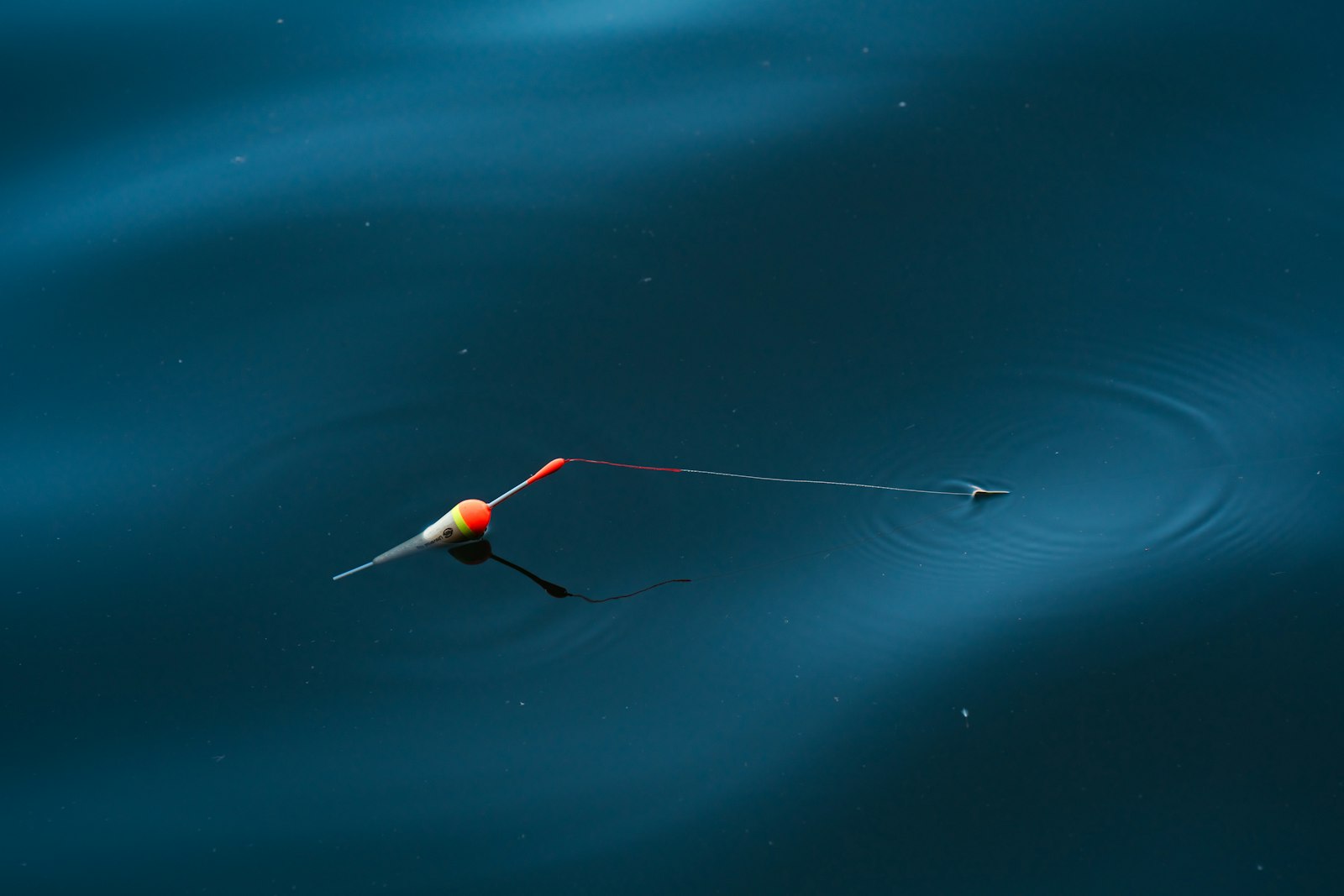
Your float only needs enough buoyancy to hold up the bait and split shot while staying easy to see. Smaller floats are usually better because they are more sensitive. If the float looks like it belongs on a catfish rig but you are trying to catch bluegill, it is too much.
A slim float or small round bobber is usually the sweet spot for beginner shore fishing. Go bigger only when wind, waves, or heavier bait force you to.
Where to Put the Split Shot
Keep the weight simple.
Pinch one or two small split shot about 8 to 12 inches above the hook. That is enough for most worm-and-bobber fishing. The split shot helps the bait sink, keeps the float upright, and makes casting easier.
If your bobber tips over flat and never stands correctly, your rig may not have enough weight. If the bobber sinks too low or disappears, you probably used too much.
This is one of those details worth testing in the shallows before your first real cast.
The Most Important Skill: Setting the Right Depth
Depth is the whole game.
Many beginners think bait choice matters most. It matters, but depth usually matters more.
Start with the hook hanging 2 to 4 feet below the bobber in shallow ponds or shoreline areas. If you are not getting bites, adjust.
Try these quick rules:
- if fish are cruising shallow, move the bait higher
- if bait-stealers keep hitting instantly, lower it slightly
- if nothing happens, add depth in small steps
- if you keep dragging bottom and snagging, raise the rig
For many spring and early summer shore trips, panfish and other easy targets will hold around cover, weed edges, docks, laydowns, and calm pockets where a suspended bait looks easy to eat.
Best Baits for Beginner Bobber Fishing
The classics are still the best place to start.
Worms
Worms remain the most forgiving beginner bait because they catch almost everything. Use a small piece for bluegill and other panfish. You do not need to thread a whole nightcrawler onto a tiny hook.
Minnows
Minnows are excellent for crappie, perch, and larger fish where legal. They are a little less beginner-friendly than worms, but they can be deadly under a slip bobber.
Artificial options
A small jig, soft plastic, or scented micro bait under a float can work well too, especially when you want less mess. But for absolute beginners, live bait usually teaches the system faster.
What Fish You Can Catch from Shore on a Bobber
A beginner bobber rig is not limited to one species.
From shore, it commonly catches:
- bluegill
- crappie
- perch
- redear sunfish
- small bass
- stocked trout in some waters
That is part of the appeal. You do not need a highly specialized plan to start learning.
The Mistakes That Ruin Beginner Bobber Fishing
Fishing the wrong depth all day
If your bobber stays in one place for an hour with no bites, change depth before you change everything else.
Using tackle that is too heavy
Big floats, thick line, huge hooks, and too much weight make small bites harder to detect.
Setting the hook too early
Do not panic-snap the rod at every twitch. Wait until the bobber clearly slides, dips, or goes under with purpose, then lift firmly.
Constantly reeling in
Bobber fishing is supposed to slow you down. Let the rig soak. A little patience catches more fish than constant adjustment.
Ignoring local rules
Live bait rules, hook rules, and harvest limits change by state and by water. Check them before you go.
What a Good First Trip Should Look Like
Keep expectations realistic.
Your first good bobber-fishing trip from shore does not need to include trophy fish. It should teach you three things:
- how your float sits in the water
- how different bites look
- how changing depth changes results
That is real progress.
Once you understand those basics, almost every other beginner bait-fishing system gets easier.
The Best Next Step
For your first shore session, do not overcomplicate it.
Bring one light spinning combo, one small pack of hooks, a few split shot, a couple of bobbers, and worms. Fish around visible cover. Change depth every few casts until something makes sense.
That approach is still one of the simplest, cheapest, and most reliable ways to catch your first fish in 2026.
If you want early confidence from the bank, a bobber is not childish or outdated. It is efficient, visual, and honestly still one of the smartest places to begin.